Weather
Black Hills weather changes quickly and canyon conditions can differ from the forecast in town. Storms bring runoff, cold and lightning exposure on exposed rock. Check a forecast the morning of your hike, not the week before.
Before you go
The trail's short distance does not mean it is an easy walk. Nearly every incident here comes from wet rock, moving water or cold — not from distance or elevation.
Twelve things to think about
Black Hills weather changes quickly and canyon conditions can differ from the forecast in town. Storms bring runoff, cold and lightning exposure on exposed rock. Check a forecast the morning of your hike, not the week before.
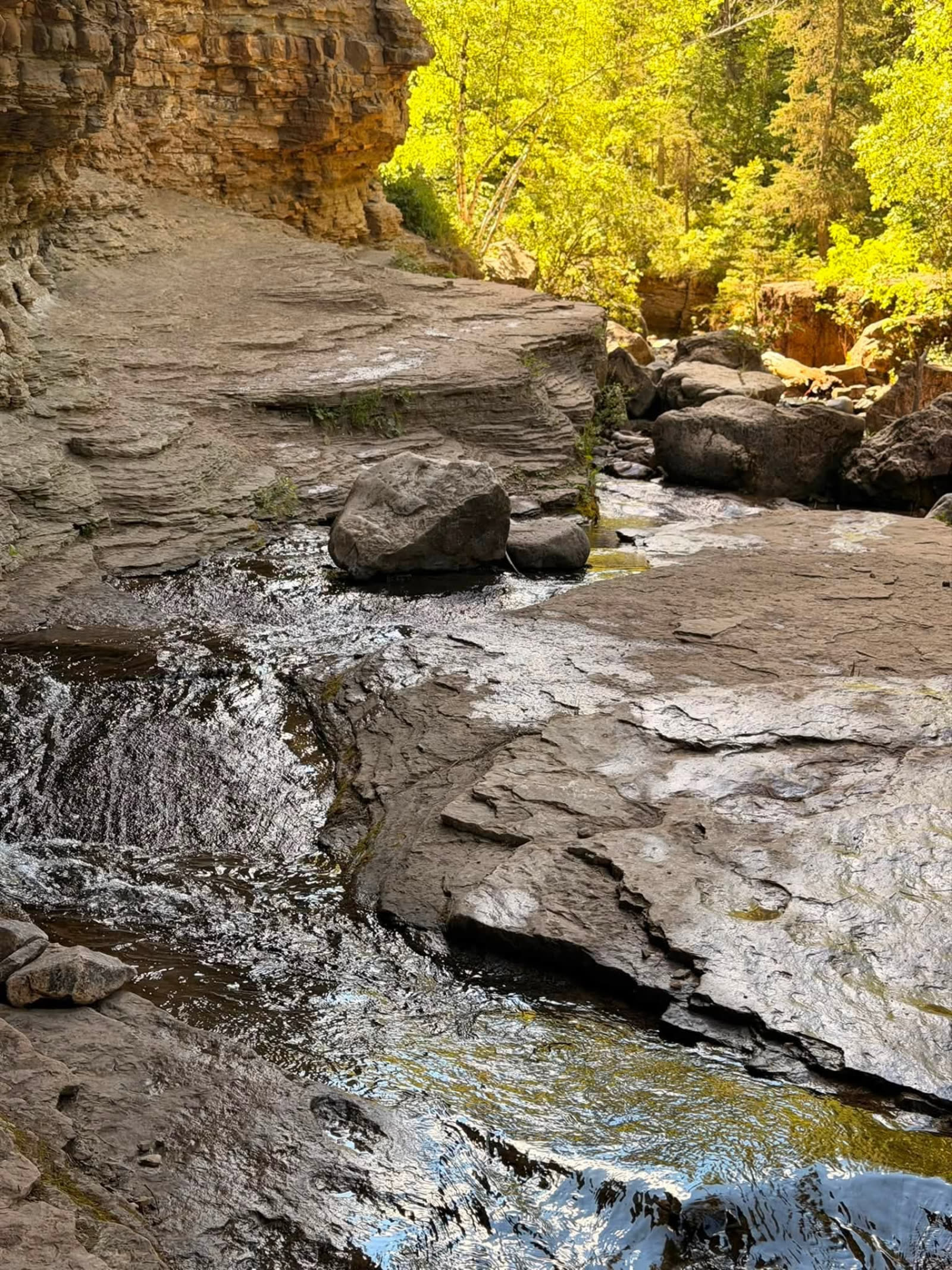
The creek is the trail. Levels rise with snowmelt and rainfall, and a crossing that was ankle-deep in August may not be in June. Never guess from photos taken in another season.
Face upstream, keep both feet planted before moving, unbuckle a pack's hip belt, and cross where the water is wide and shallow rather than narrow and fast. If a crossing feels wrong, it is a reasonable place to turn around.
Wet limestone and algae-covered stone are the most common cause of injuries here. Slow, flat foot placement beats long confident steps.
Short hands-on sections near the upper canyon require balance and upper-body use. Descending them is harder than climbing them, especially with wet shoes.
Spearfish Canyon creek water stays cold year-round. Cold shock is real even on hot days — enter slowly and get out if you start shivering.
The pool is small, shallow in places and hides submerged rock. Never jump or dive. Depth and debris change with every high-water event.
Many families hike this trail, but it is not a stroller route and it is not a walk. Kids need constant hands-on supervision at crossings and near moving water.
Dogs are commonly brought here on leash. Consider paw traction on wet rock, cold water, and whether your dog can be controlled around other groups in tight spots. Follow current posted rules.
Braided social paths along the creek can be confusing. Download an offline map before you arrive and do not count on cell service in the canyon.
Tell someone your plan and expected return time. Carry a small first-aid kit, a light and an extra layer. Help is not quick to reach in a narrow canyon.
Pack out everything, including food scraps and tape. Stay on rock and durable surfaces, skip building rock cairns or dams, and leave the pool the way you found it.
Conditions change. These are the things this guide cannot tell you.
Closures and parking rules can also be posted on site with no notice online. Read the signs at the trailhead and follow current restrictions when you arrive.